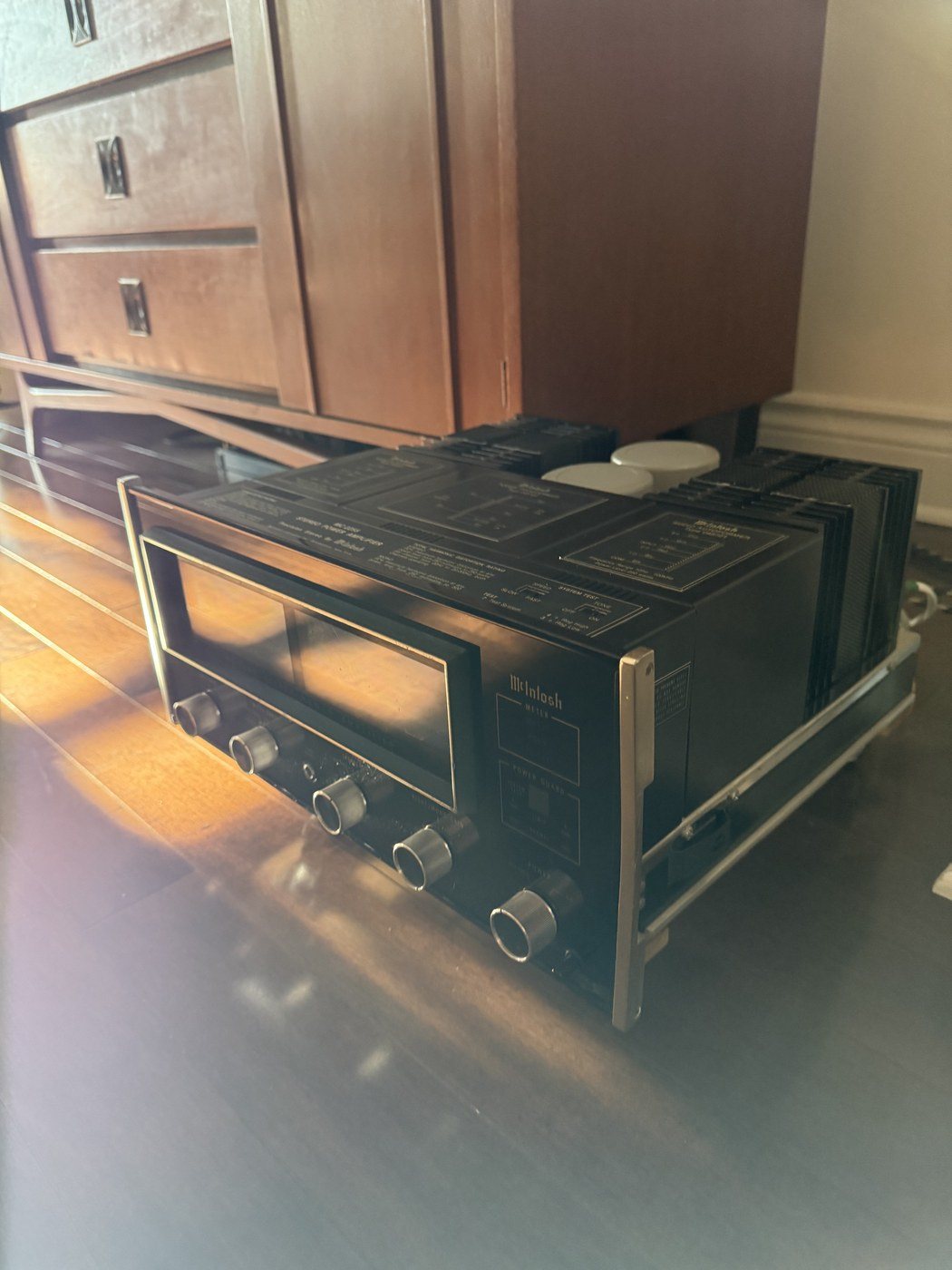
A deep dive into McIntosh's MC2255 power amplifier — its factory pairing with the C33 preamp, its place in McIntosh amplifier history, and how it sounds today through a Thorens TD125 MkII and Klipsch Forte IV speakers.
Why the MC2255 and C33 Were Built to Be Paired
Every matched pair tells a story about intention. When I wrote about my McIntosh C33 preamplifier, I mentioned the pairing was never accidental. McIntosh built the C33 preamplifier and MC2255 power amplifier in the exact same production window, 1981 to 1986, as a deliberate factory match. What I didn't know then was how that story would end for me. My MC2255 carries serial number CT5619, placing it among the final roughly 80 units built before production stopped at CT5700. This is a piece from the very last batch McIntosh ever made of this amplifier, and it deserved its own deep dive into McIntosh amplifier history, specs, and sound.
MC2255 Specs and How They Align With the C33
On paper, the C33 preamplifier and MC2255 power amplifier speak the same language. The preamp's output stage is voiced to drive directly into the MC2255's input sensitivity, and the gain staging between the two leaves plenty of headroom without clipping at high listening levels. The MC2255 delivers 250 watts per channel, 500 watts in mono mode, just 0.02% total harmonic distortion, and a noise floor near −95dB. The amplifier's output stage is built to properly match 1, 2, 4, and 8-ohm speaker loads, giving it flexibility that most solid-state amplifiers of its era simply didn't offer.
MC2255 Build Quality and Industrial Design
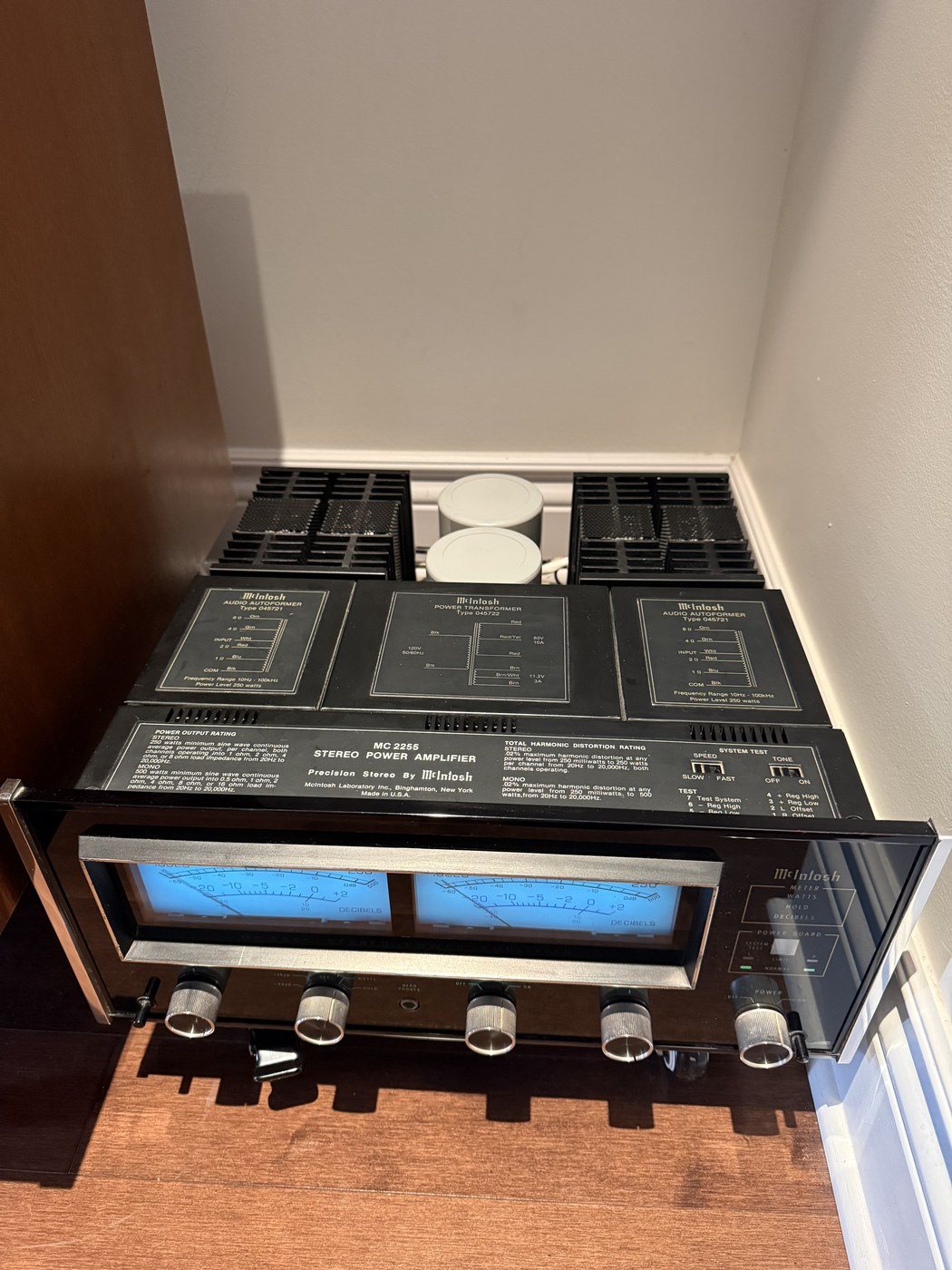
Pick up an MC2255 and you feel the engineering immediately. This is an 82-pound chassis built like a bank vault. Inside, McIntosh packed the circuit with 85 transistors, 14 integrated circuits, and 47 diodes, a genuinely dense semiconductor count for a 1982 solid-state design. The full glass front panel and glowing blue meters aren't just cosmetic; they're part of a construction philosophy that prioritized heavy-gauge steel, oversized transformers, and conservative component ratings over anything resembling cost-cutting. That over-engineering is likely why a unit built near the very end of the production run still measures close to factory spec four decades later. Late-serial units from a production cycle often benefit from final refinements and consistent parts sourcing, which makes them quietly desirable among collectors chasing the last of the line.
MC2255 vs MC7270: Where It Sits in McIntosh Amplifier History
The MC2255 sits at a hinge point in McIntosh's solid-state amplifier lineage, and the story of what came next is more interesting than a simple spec-sheet comparison suggests. The MC7270 arrived in November 1985, still weighing in at 82 pounds and matching the same 1, 2, 4, and 8-ohm output flexibility. But look closer at the cabinet itself and the cost pressure becomes visible: the MC7270's chassis is black-painted metal rather than the more finished treatment of the MC2255, and its front panel uses only a partial glass insert set into a metal surround, rather than the MC2255's full glass face. Push it and it delivers 270 watts per channel, a real if modest gain over the MC2255's 250. On the surface, it reads like a straightforward refresh, but the fit and finish already tell you McIntosh was trimming visible cost even while keeping the flagship electronics intact.
Open the chassis, and a similar story plays out inside. McIntosh simplified the circuit on the way to more power, trimming the semiconductor count from the MC2255's 85 transistors and 14 integrated circuits down to 79 transistors and just 7 integrated circuits. Fewer active devices doing more work is either a sign of a cleaner, more efficient redesign or a sign of parts-cost discipline creeping in, and given the visible cabinet cost-cutting, it's likely both at once. What McIntosh added in exchange was something genuinely new: a patented Sentry Monitor circuit, layered on top of the existing Power Guard protection, that continuously watches the output signal and intervenes instantly to stop the output transistors from being overloaded. Where the MC2255 relied on Power Guard alone to prevent clipping, the MC7270 introduced a second, faster layer of active protection, engineering headroom to run harder without the same risk of stress on the output stage. Longtime owners who've had both amplifiers on the test bench often describe the MC7270 as sounding slightly more transparent, a plausible result of a leaner signal path even with fewer components in it.
Set against that backdrop, the MC2255 reads like the last amplifier from an era before McIntosh started visibly trimming cost on the cabinet and finish, even while keeping the underlying electrical performance largely intact in the model that followed it. All of this happened well before Clarion's 1990 acquisition of McIntosh, meaning both the MC2255 and MC7270 predate any change in corporate ownership entirely.
The McIntosh Sonic Pivot: From Warmth Toward Clarity
Earlier McIntosh solid-state amplifiers, like the MC2100 and MC2505 generation, were prized for a fuller, rounder tone, smooth but sometimes at the cost of ultimate resolution. By the time the MC2255 arrived, McIntosh had clearly begun pivoting toward greater clarity and speed without abandoning that house sound. The result is a power amplifier that still sounds unmistakably McIntosh, buttery and unforced, never harsh, but resolves more air around instruments and more separation between voices than the amplifiers that came before it.
My Listening Chain: Thorens TD125 MkII, DAC, and Klipsch Forte IV
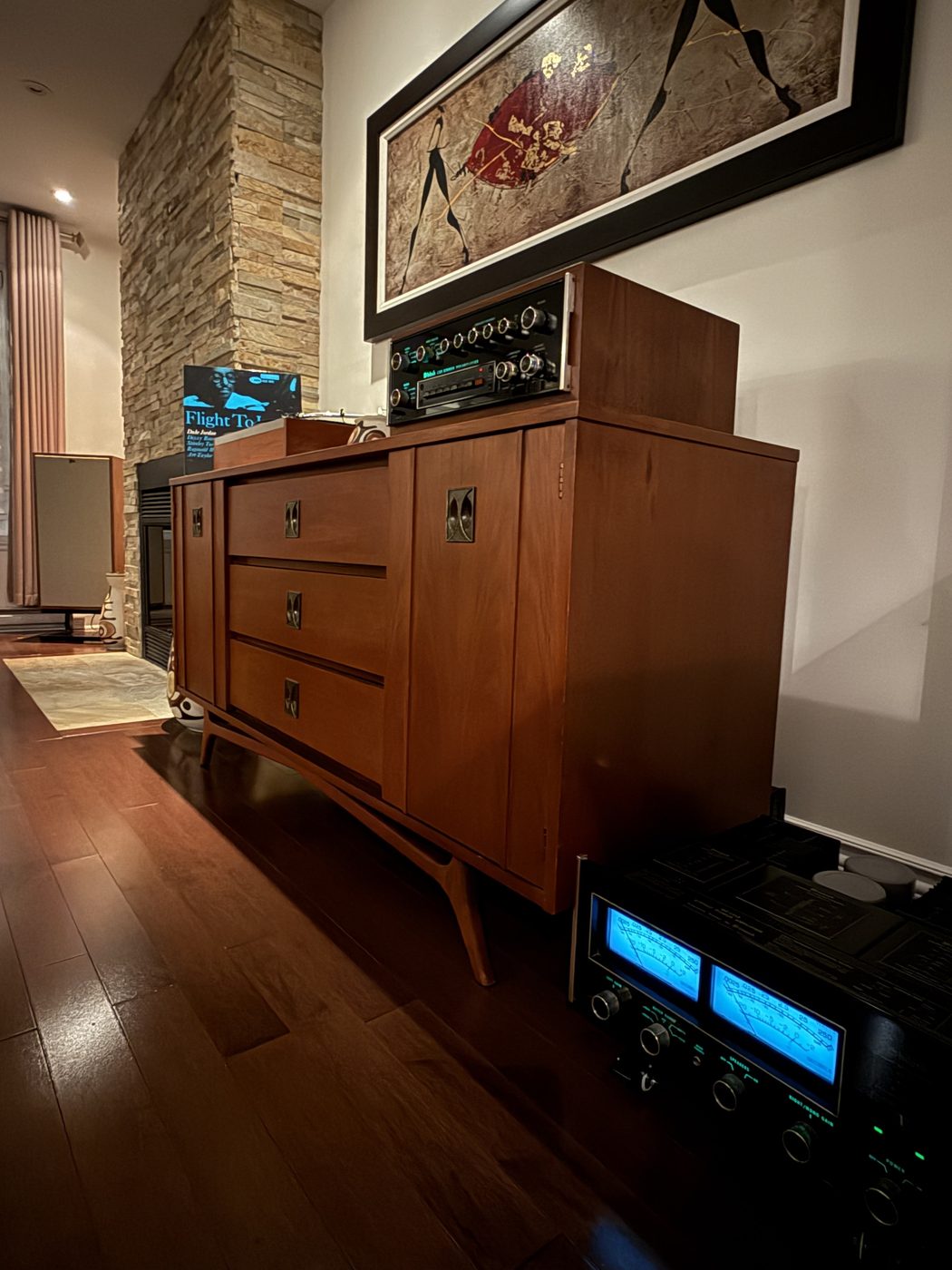
I run my C33 and MC2255 off a Thorens TD125 MkII turntable and a Denafrips Ares II DAC for digital, into a pair of Klipsch Forte IV speakers. The Forte IVs are horn-loaded and highly sensitive, which means they don't flatter or hide anything upstream. If the MC2255 was adding coloration or losing detail compared to the C33 alone, these speakers would tell me immediately, and that made them the perfect test bed for this comparison.
MC2255 vs C33 Monitor Amp: The A/B Listening Experience
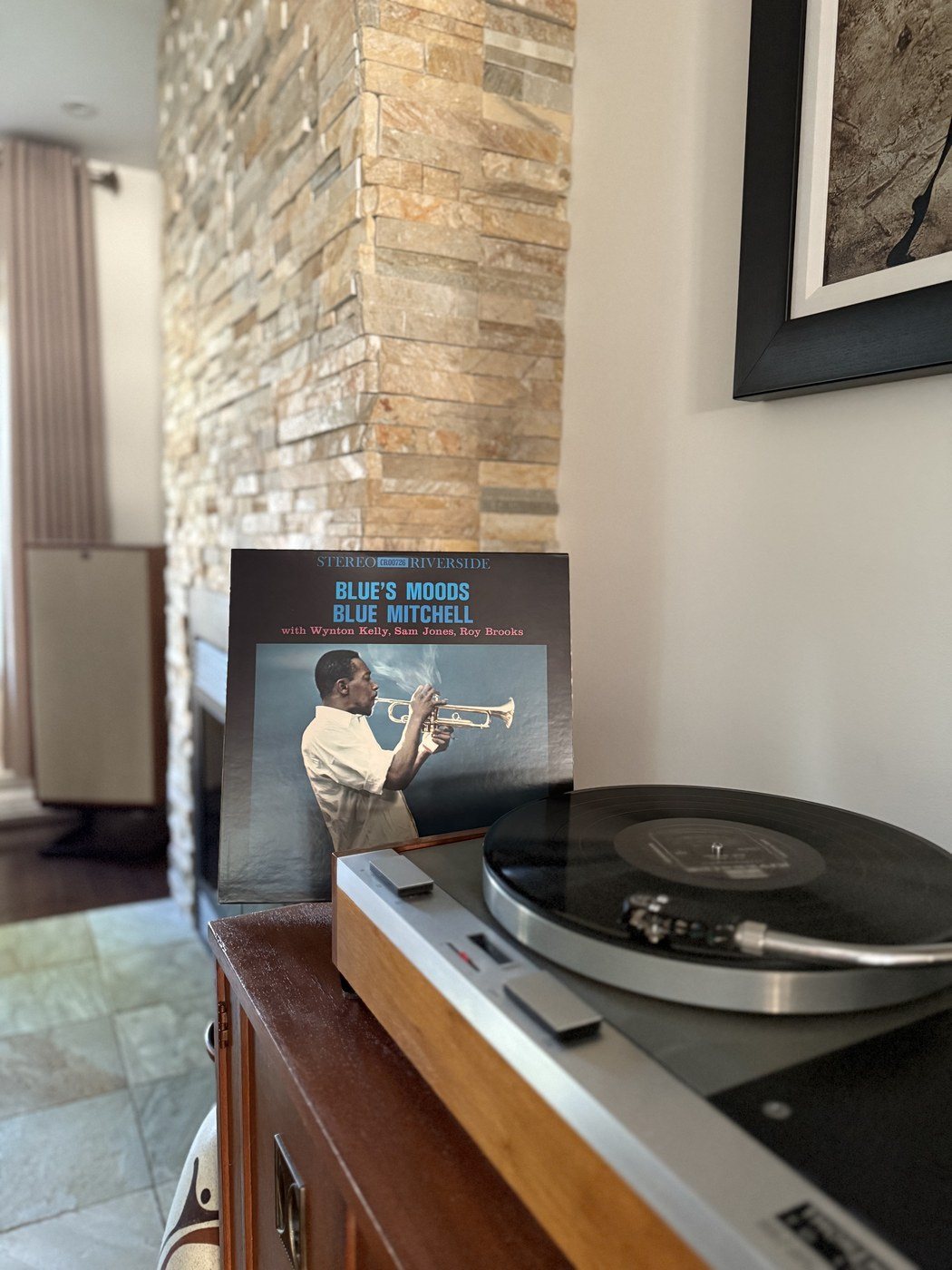
The real test was comparing the C33's internal monitor amp against the same signal routed through the MC2255. At my normal jazz listening levels, the difference is subtle at first. Tonal balance, warmth, and overall character stay remarkably consistent between the two paths, which is exactly what you'd expect from a factory-matched pair voiced to work together. That consistency is the punchline of this whole story: the MC2255 doesn't reinvent what the C33 already does well through its monitor amp, it extends it.
Listen closer and the differences emerge in layers and over time. Cymbal decay lingers a touch longer before dissolving into the room. Brushed snare picks up more texture and grain, the kind of detail that's easy to miss until you hear it appear. Bass lines gain noticeably more authority and speed, with the Forte IV's horn-loaded midrange snapping to attention on horn and piano transients in a way the monitor amp alone can't quite match. Soundstage width opens slightly, giving soloists a touch more separation from the rest of the ensemble. None of this ever tips into brightness or fatigue. It's the same smooth, unforced McIntosh voice, just with more headroom and air behind it, brute force held in reserve until the music actually asks for it. On quieter jazz passages that reserve power stays invisible, and it's only on dynamic peaks, a horn section swell or a sudden bass drum hit, that you feel the MC2255 flex muscle the monitor amp simply doesn't have.
The MC2255 doesn't reinvent what the C33 already does well through its monitor amp — it extends it.
In summary, I'd still be completely satisfied listening to the C33 alone through its internal 20-watt monitor amp. But adding the MC2255 into the chain, driving my Forte IV speakers, brings extra power and extra detail that only adds to the pleasure, it never gets in the way of it. And I have to admit, beyond how it sounds, the MC2255's industrial design is a piece of audio history in its own right, the kind of thing I'd happily display as art even with the volume down.
Built for the Ages, Tuned to a Feeling
What strikes me most after all this listening isn't just that a 40-year-old amplifier still functions well, it's that after four decades it still sounds astonishingly great, full stop, no qualifiers needed. Part of what makes vintage audio collecting so satisfying is the same thing that makes falling in love with a particular jazz style so satisfying, whether that's hard bop, cool jazz, or something else entirely. Every sound and every era carries its own character, and the real joy of this hobby is discovering the tone and the period that resonates with you most. Loving a certain sound, in audio gear or in jazz, isn't an objective ranking of what's technically superior, it's a deeply personal choice about what feels most meaningful and rewarding to you. For McIntosh, this pairing is mine. The C33 and MC2255 sit at what I consider the pinnacle of that house sound, a combination that delivers just the right amount of smoothness balanced against just the right amount of transparency and detail, without tipping too far toward either extreme. Forty years on, built the way it was, that balance hasn't gone anywhere.